Overview
The 6 Days Imperial Cities Tour from Casablanca is Morocco’s classic grand journey — a route that connects the four great royal capitals of the Moroccan empire, each one bearing the architectural ambitions and cultural fingerprints of a different dynasty. Beginning in Casablanca, the tour visits Rabat, Meknes, Fes, and finally Marrakech, tracing a thousand years of Moroccan history through medinas, palaces, mausoleums, and living souks that still function exactly as they did in the medieval period.
Morocco’s imperial cities are unlike any other collection of historic cities in the world. Rabat is the modern capital, elegant and compact, where Roman ruins at Chellah sit within the city’s royal park and the twelfth-century Hassan Tower stands unfinished yet magnificent beside the Mohammed V Mausoleum — a breathtaking example of contemporary Moroccan craftsmanship. Meknes, built by the megalomaniac sultan Moulay Ismail in the seventeenth century, is the most undervisited of the four capitals — its monumental walls, granaries, and the vast Bab Mansour gate reveal an ambition that rivalled Versailles.
Fes el-Bali is the jewel of the imperial cities — a UNESCO World Heritage medina of extraordinary complexity and beauty. Founded in the ninth century and essentially unchanged in plan since the medieval period, Fes is home to the world’s oldest university (the Qarawiyyin, founded 859 AD), the famous Chouara tanneries, and some of the finest Islamic architecture anywhere on earth. A licensed Fes guide is indispensable — without one, the medina is an overwhelming maze; with one, it becomes a deeply rewarding and comprehensible city of learning and craft.
Marrakech, the final imperial city and the starting point for so many Morocco adventures, completes the circuit. The Red City built by the Almoravid dynasty in 1070 remains one of the world’s great cities — its Jemaa el-Fnaa square a living theatre of storytellers, musicians, and food vendors that UNESCO recognised as a Masterpiece of the Oral and Intangible Heritage of Humanity. The Saadian Tombs, the Bahia Palace, and the Majorelle Garden add layers of art and history to a city best experienced simply by walking its medina at different hours of the day.
This six-day itinerary gives you a full day in both Fes and Marrakech — the two most important imperial cities — with well-paced stops in Rabat and Meknes. Volubilis, the finest Roman archaeological site in Africa, is included as a natural stop between Meknes and Fes.
Highlights
- Begin in Casablanca with the magnificent Hassan II Mosque
- Explore Rabat: the Kasbah of the Udayas, Chellah necropolis & Hassan Tower
- Visit Meknes and the magnificent Bab Mansour gate — one of Africa’s finest
- Explore the royal granaries and stables of Moulay Ismail’s imperial city
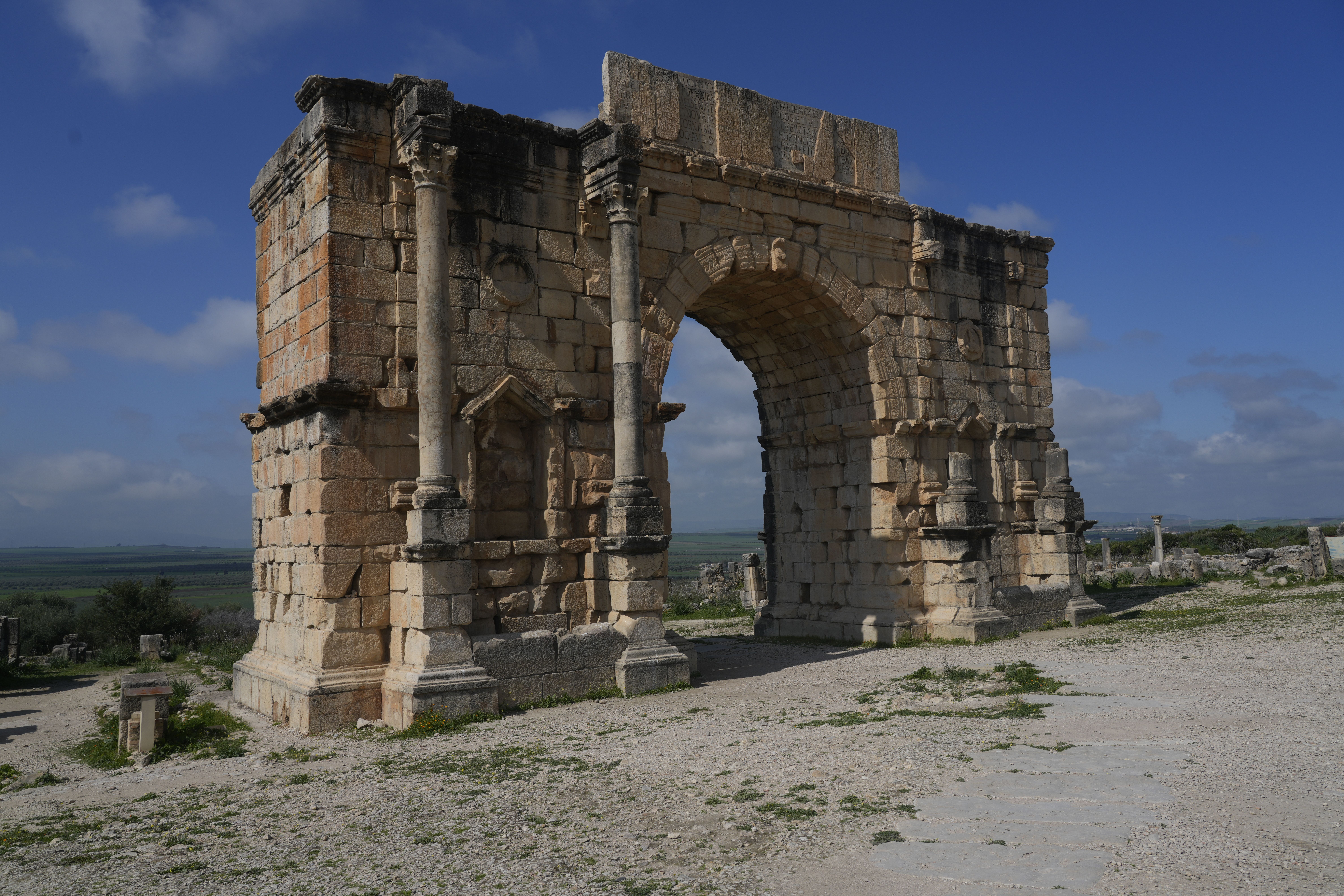
- Walk the Roman ruins of Volubilis — mosaics, temples, and triumphal arch
- Full-day guided tour of Fes el-Bali medina with licensed specialist guide
- See the Chouara tanneries and the Bou Inania Medersa in Fes
- Explore Marrakech: Jemaa el-Fnaa, Saadian Tombs & Bahia Palace
- Experience the distinct character, cuisine, and craft of four royal capitals
- Private guide and transport throughout — no group tours, no fixed schedules
Day by Day Itinerary
Day 1: Casablanca — Hassan II Mosque & Departure to Rabat
Morning in Casablanca visiting the Hassan II Mosque — the world’s third-largest mosque and the only one in Morocco open to non-Muslims, with its extraordinary 210-metre minaret and ocean-facing terrace. Explore the Art Deco Habous quarter before driving north to Rabat (45 minutes). Check into your riad and enjoy the late afternoon in the Oudayas Kasbah — a whitewashed Andalusian village perched over the mouth of the Bouregreg river, with a café terrace that has inspired artists and writers for a century. Overnight in Rabat.
Day 2: Rabat City Tour & Drive to Meknes
Full morning in Rabat with your guide: the Mohammed V Mausoleum and Hassan Tower, the twelfth-century Almohad minaret that was meant to be the tallest in the world; the Chellah necropolis, where Merinid tombs, a Roman city, and storks nesting on ancient columns create an extraordinary palimpsest of history; and the Rabat medina with its excellent craft and jewellery souks. After lunch, drive east to Meknes (1.5 hours). Overnight in a riad in the Meknes medina.
Day 3: Meknes, Volubilis & Drive to Fes
Morning in Meknes: the monumental Bab Mansour gate, the Moulay Ismail Mausoleum (open to non-Muslims), the Heri es-Souani granaries and stables — built to house 12,000 horses and store enough grain to survive a 20-year siege — and the Place el-Hedim square. After lunch, drive 30 minutes to the Roman site of Volubilis. Spend 90 minutes exploring the triumphal arch, basilica, forum, and the magnificent mosaic floors of the wealthy merchant houses. Continue to Fes (45 minutes). Overnight in a Fes medina riad.
Day 4: Fes — Full Day Medina Tour
Dedicated full day in Fes el-Bali with a licensed medina specialist. Morning: the Bou Inania Medersa — the most ornate Merinid monument in Fes; the Attarine Medersa beside the Qarawiyyin Mosque; the brass and copper souks. Midday: the Chouara tanneries — the best overview is from the leather shop balconies above, where the stone vats of colour have been in continuous use since the eleventh century. Afternoon: the dyers’ souk, the Andalusian quarter, and the potters’ quarter on the eastern edge of the medina. Overnight in Fes.
Day 5: Fes to Marrakech via Ifrane & Middle Atlas
The direct Fes–Marrakech drive passes through the Middle Atlas — Morocco’s alpine heartland. Stop in Ifrane, a Swiss-chalet town built by the French protectorate, and at Azrou in the cedar forest to look for Barbary macaques. Cross the High Atlas plateau and arrive in Marrakech in the late afternoon or evening. First walk in the Jemaa el-Fnaa as the square comes alive after dark. Overnight in a Marrakech medina riad.
Day 6: Marrakech — Imperial City & Medina
Final day in the Red City with your guide: the Koutoubia Mosque and its twelfth-century minaret; the Saadian Tombs — a gilded mausoleum discovered in 1917 after being sealed for 200 years; the opulent Bahia Palace; and the souks of the medina’s northern quarter, organised by craft — woodworking, leather, textiles, and spices. The afternoon is yours for independent exploration — the Majorelle Garden, the Yves Saint Laurent Museum, or simply getting wonderfully lost in the alleyways of the old city.
What’s Included
- Private transport Casablanca–Rabat–Meknes–Fes–Marrakech
- Expert English-speaking licensed guide throughout
- Licensed specialist guide for Fes medina full-day tour
- 5 nights in riads (breakfast included)
- Entrance fees: Hassan II Mosque, Volubilis, Bou Inania Medersa, Saadian Tombs, Bahia Palace
- Lunch on Day 1 in Casablanca
What’s Not Included
- International flights to and from Morocco
- Travel insurance
- Personal lunches (Days 2–6) and dinners
- Tips for guides and driver
- Optional activities (hammam, cooking class, carriage ride)
- Visa fees where applicable
- Personal expenses and souvenirs
Travel Tips
This tour works year-round. Note that the Fes medina is busiest in July and August — spring and autumn give a more comfortable medina experience. Comfortable walking shoes are essential — each medina day involves 5–8 kilometres of walking on uneven cobblestones. The Hassan II Mosque in Casablanca requires modest dress (shoulders and knees covered) for entry.
Frequently Asked Questions
Q: Why is this called the Imperial Cities tour? A: Morocco’s four imperial cities — Fes, Meknes, Marrakech, and Rabat — each served as the country’s capital at different points in history. Together they represent the full arc of Moroccan dynastic history from the eighth century to the present day.
Q: How much walking is involved? A: Each medina day involves between 4 and 8 kilometres of walking on uneven surfaces. The tour is not physically demanding but does require comfortable, sturdy footwear. We can reduce walking distances on request.
Q: Can we skip Meknes and spend more time in Fes? A: Yes — we can customise the itinerary. However, Meknes is genuinely rewarding and far less crowded than Fes or Marrakech; most guests who consider skipping it are glad they didn’t.
Q: What is the best time of year? A: This tour works year-round, but March–May and September–November offer the best balance of weather and crowd levels.